
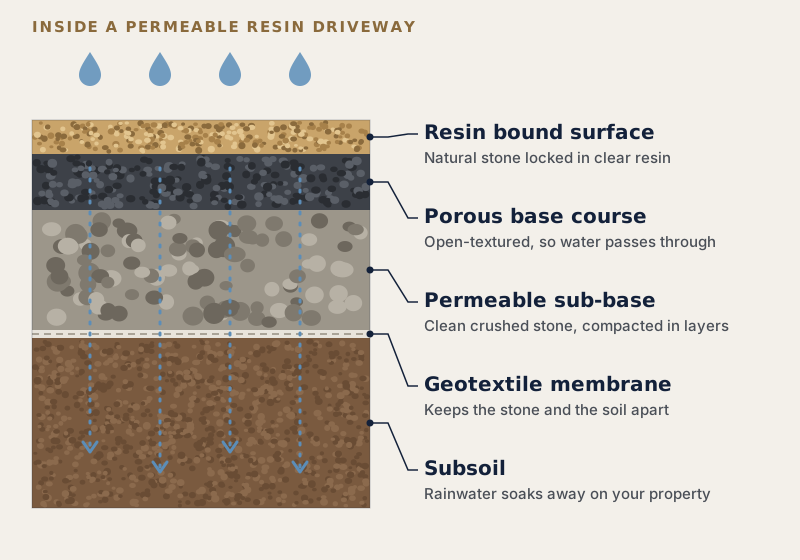
Quotes for resin bound and resin bonded driveways often arrive side by side, and the names differ by a single word. The two surfaces are made in opposite ways, though, and the difference shows within a few years.
How resin bound is made
For a resin bound surface, dried natural stone and clear resin are mixed together on site and then trowelled flat by hand. Every stone is coated, so the finished surface is smooth and firm underfoot, with tiny gaps between the stones that let water through.
How resin bonded is made
For a resin bonded surface, a layer of resin is spread over the base first and loose stone is scattered into it while it is wet. Once it sets, the excess is swept away. The result has a rougher, gravel-like texture, but each stone is held only at its underside.
Drainage and planning
Resin bound is permeable when it is laid over a porous base, so rain soaks through it, and a front drive built that way stays within the planning rules. Resin bonded is not permeable, because the layer of resin underneath seals the surface. Over a large front garden that drains onto the road, it needs planning permission.
Wear and upkeep
A resin bound drive needs a sweep and an occasional wash, and its stones stay put. A resin bonded surface gradually loses stones, especially where car tyres turn, and in time it needs recoating.
Which one we lay
We lay resin bound on driveways, because it drains, holds its stone and stays smooth. Resin bonded has its uses, such as a grippy finish on a steep ramp, but on a front drive resin bound is the safer choice.
Related services