
Most new driveways in England do not need planning permission. Three things can change that: the surface you choose, where the rainwater goes, and whether you need to cross the pavement to reach the road. Here is how each one works, and who to ask locally.
The rule for front gardens
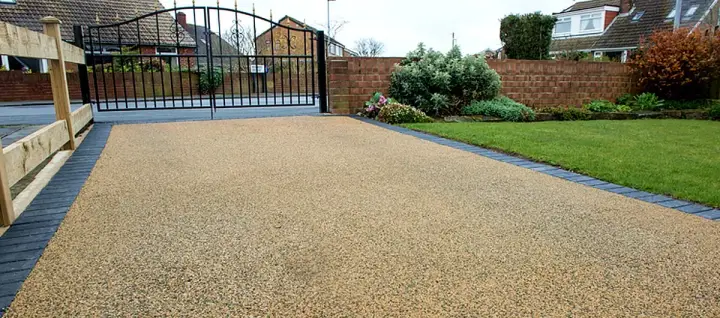
Under the national permitted development rules, you can pave a front garden without planning permission as long as the surface is permeable, such as resin bound, permeable block paving or gravel, or the rainwater runs off onto a lawn or border within your own property.
If you cover more than five square metres of front garden with a surface that sends water onto the road, such as ordinary concrete, tarmac or standard block paving, you need planning permission. The rule exists because hard front gardens add to the water rushing into drains in heavy rain. A permeable drive lets it soak away where it falls.
Side and back gardens
The surface rules apply to the area between the front of the house and the road. Paving to the side or rear of a house is usually covered by permitted development without them, although it is still sensible to make sure water drains away from the house and not towards it.
When the normal rules do not apply
Flats and maisonettes do not have permitted development rights, so new hard surfaces there need planning permission. Listed buildings may need listed building consent for work that affects their setting. Some conservation areas, and streets covered by what is called an Article 4 direction, have had the usual rights removed.
If any of these might apply to your home, check with your council's planning team before any work is booked in.
Dropped kerbs need a separate permission
If you will drive across the pavement to reach your new drive, the kerb has to be lowered, and that needs permission from the council as highway authority whatever surface you choose. On a classified road, such as an A, B or C road, you may need planning permission as well.
Councils usually lower the kerb with their own contractor or one they nominate, and applications take time, so start that process early, alongside planning the driveway itself.
Who to ask in Dorset and Hampshire
In Bournemouth, Christchurch and Poole, planning and dropped kerbs are both handled by BCP Council. Elsewhere in Dorset, it is Dorset Council. In Southampton, it is Southampton City Council.
In the rest of Hampshire the work is split: planning is handled by your district or borough council, while Hampshire County Council looks after the highway, including dropped kerbs.
How we help
When we visit to measure up, we will tell you whether your plans are likely to need any permission, and we design drives to drain on your own property so that, in most cases, they do not.
Related services